
This page describes widely used and safe training tools that are commonly employed within a balanced training approach.
A treat pouch/treats

A treat pouch is not merely a place to store treats, but a signal of readiness to train. It shows that the owner has thought in advance about which behaviors they want to see and how to support them. The presence of a treat pouch indicates that training is not approached randomly or solely through correction or prohibition, but with a conscious willingness to recognize and reinforce desirable behavior.
In practical training, the use of treats helps create motivation, and well-timed praise strengthens the behaviors we want to see more often. This reduces confusion and supports cooperation between dog and handler. Treats do not mean “bribing” a dog, but rather a responsible approach to learning, where positive behavior does not go unnoticed.
Within balanced dog training, giving treats is not about creating dependency, but about using a tool that supports learning when it is most needed. It reflects consideration for the dog’s motivation and well-being, and shows that the owner is prepared to invest not only in setting boundaries, but also in reinforcing desirable behavior.
Prong Collar
A prong collar is a mechanical handling tool whose working principle is based on the even distribution of short-term pressure around the neck. Unlike a flat collar, pressure is not concentrated on a single narrow point, but spread across multiple contact points, which reduces the risk of localized strain and tissue overload. From a physiological perspective, it provides a clear yet controllable mechanical stimulus, the purpose of which is not constant pressure, but the delivery of brief and precise information.
 The study Comparing the efficacy of different training aids in reducing pulling on the lead and improving welfare in dogs found that a prong collar can be an effective tool for reducing leash pulling, without evidence of physical harm when compared to other commonly used walking equipment (Grainger et al., 2016). A key conclusion of the study was that, from a welfare perspective, the determining factor is not so much the type of equipment used, but how it is used—particularly whether pressure is brief and released immediately after the desired response. Continuous, uninterrupted tension was associated with increased stress indicators regardless of the type of equipment.
I use only prong collars manufactured by Herm Sprenger. The company has a long production history, and its products meet high quality and material standards. Herm Sprenger prong collars are designed with rounded contact points, smooth joints, and even pressure distribution. This significantly reduces the risk of injury compared to low-quality imitations. These products are also widely used in the North American market, where equipment for working and sport dogs is subject to strict safety requirements.
From both a scientific and clinical perspective, the risks associated with prong collar use are primarily linked to user error, rather than to the tool itself. The most common risks include:
wearing the collar continuously for excessively long periods, which may lead to skin irritation caused by friction;
individual hypersensitivity or allergic reactions to metal or surface coatings.
Veterinary literature emphasizes that such issues are preventable through correct fitting, regular skin checks, and limited duration of use (Overall, 2013). When used correctly, no permanent tissue damage or long-term physiological side effects have been described (Lindsay, 2000).
Accordingly, we treat the prong collar as a handling and learning tool. Its role is to help the dog learn clear boundaries for leash behavior by delivering information more precisely and efficiently. Both scientific research and practical experience indicate that, when used in this manner, the prong collar is a safe, predictable, and effective training tool.
Electronic Collar
An electronic collar (e-collar) is a remote-controlled training and handling tool that allows the delivery of short-duration, adjustable-intensity stimuli, most commonly in the form of an electrical impulse, vibration, or audible signal. Physiologically, this is not an electric shock that causes tissue damage, but a low-current, brief neuromuscular stimulation designed to provide a clear and perceivable signal to the dog, not to cause pain or injury.
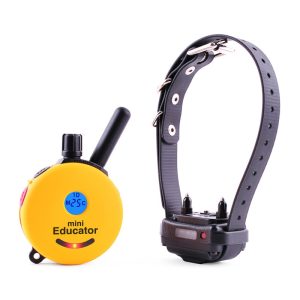
It is important to emphasize that the effect of an electronic collar does not stem from the “strength” of the device, but from the precision and predictability of the signal. Scientific literature has repeatedly shown that increased stress or reduced welfare is not inherently linked to the presence of an e-collar itself, but rather to how and in what context it is used. Particularly critical factors include individual adjustment of intensity, signal duration, and whether the dog clearly understands the relationship between its behavior and the stimulus (Cooper et al., 2014; Overall, 2013).
Studies comparing the use of electronic collars with other training methods indicate that, when applied under competent guidance, e-collars do not result in reduced welfare indicators such as elevated cortisol levels or increased behavioral stress when compared to alternative approaches (China et al., 2019). Problems arise primarily when the device is used without prior conditioning or in situations where the dog cannot identify which behavior triggers or terminates the stimulus. In such cases, the stimulus may become an unpredictable stressor.
I primarily use equipment from E-Collar Technologies, as these devices allow extremely fine-grained intensity adjustment and give the trainer precise control over both signal strength and duration. These features are scientifically relevant, as welfare considerations require that, especially during the learning phase, the stimulus be as mild as possible while still being perceptible, and clearly distinguishable from other environmental stimuli. E-Collar Technologies devices are also widely used in the training of working and service dogs, where reliability and predictability of equipment are essential.
With regard to physical injury, veterinary literature indicates that electronic collars do not cause tissue damage, burns, or nerve injury. Potential side effects are primarily associated with prolonged placement of contact points in the same location, which may lead to localized skin irritation. These risks are mitigated through correct fitting, regular inspection of the neck area, and periodic repositioning of the contact points (Overall, 2013).
The electronic collar is therefore regarded as a precision handling and training tool, intended to help dogs learn clear and safe behavioral boundaries in situations where a leash, voice, or body language alone may be insufficient. An electronic collar can also provide the dog with greater freedom within controlled conditions. Both scientific research and clinical practice indicate that, when used in this manner, the e-collar is a predictable and safe tool.
Muzzle
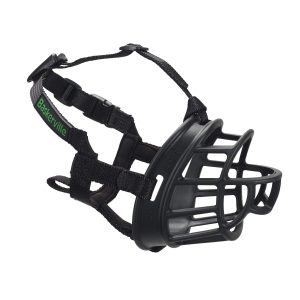 A muzzle is primarily a risk-management and safety tool, not a direct training device. Its main purpose is to prevent bites and injuries in situations where a dog may experience intense stress, pain, or loss of control, such as during veterinary procedures, in crowded environments, or in the presence of behavioral challenges. Scientific and clinical literature emphasizes that the use of a muzzle is not, in itself, a form of punishment or a welfare violation, but a preventive measure that protects both the dog and the people around it (Overall, 2013).
A safe muzzle is one that allows the dog to breathe freely, pant, and regulate body temperature. This is particularly important for thermoregulation, as dogs primarily cool themselves through panting. Behavioral stress most often arises not from the muzzle itself, but from situations in which the muzzle is applied without prior conditioning and positive association. Research and clinical practice show that a muzzle that has been gradually and properly introduced does not increase aggression and may even reduce tension, as it lowers social pressure and decreases owner anxiety.
Leash
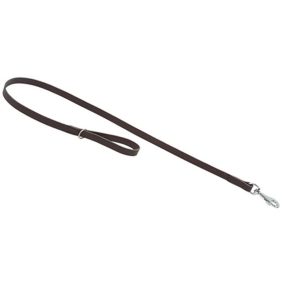
A leash is first and foremost a safety and management tool, designed to limit a dog’s movement and prevent dangerous situations in traffic and public spaces. Biomechanically, the leash transmits information to the dog through the neck or body, depending on the equipment used, and directly influences the dog’s movement pattern and posture.
Scientific literature has repeatedly emphasized that, from a welfare perspective, the issue is not the presence of the leash itself, but constant and uninterrupted tension. Continuous pressure on the neck or body can affect muscle tension, joint movement, and increase stress responses (Beerda et al., 1998). Brief contact followed by immediate release of pressure is significantly less physically demanding and more predictable for the dog. Safe leash use therefore requires conscious handling, appropriate length and material, and an understanding that the leash is a communication tool rather than a mechanism of constant control.
Crate
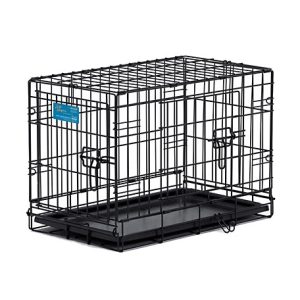
A crate is not a punishment device nor a direct training tool, but a means of environmental management and recovery. From an ethological perspective, its use is based on the dog’s natural need for a secure and clearly defined resting space. When used correctly, a crate allows the dog to withdraw from excessive stimulation and to recover both physically and mentally.
In behavioral medicine, crates are commonly used in situations where it is necessary to prevent the repetition of undesirable behavior or to provide the dog with a calm and predictable environment. Scientifically, it is emphasized that the welfare impact of crate use depends on duration of use, appropriate size, and prior conditioning. Stress and reduced welfare are associated with prolonged isolation, insufficient physical activity, and lack of social contact—not with the crate itself (Overall, 2013).
From a rehabilitation perspective, the crate is a valuable tool for supporting impulse control. It is also commonly used in the training of dogs with indoor elimination issues and in the rehabilitation of dogs suffering from separation-related anxiety.
References
Grainger, J., Wills, A. P., Rooney, N. J., & Walker, R. (2016). Comparing the efficacy of different training aids in reducing pulling on the lead and improving welfare in dogs. Applied Animal Behaviour Science, 176, 79–86. https://doi.org/10.1016/j.applanim.2015.12.009
Cooper, J. J., Cracknell, N., Hardiman, J., Wright, H., & Mills, D. S. (2014). The welfare consequences and efficacy of training pet dogs with remote electronic training collars. PLOS ONE, 9(9), e102722.
China, L., Mills, D. S., & Cooper, J. J. (2019). Efficacy of dog training with and without remote electronic collars. Frontiers in Veterinary Science, 6, 93.
Overall, K. L. (2013). Manual of Clinical Behavioral Medicine for Dogs and Cats. Elsevier.
Lindsay, S. R. (2000). Handbook of Applied Dog Behavior and Training. Iowa State University Press.
Beerda, B., Schilder, M. B. H., van Hooff, J. A. R. A. M., de Vries, H. W., & Mol, J. A. (1998). Behavioral, saliva cortisol and heart rate responses to stress in dogs. Applied Animal Behaviour Science, 58, 365–381.