
4 Dog Training Tools That Are Most Feared and Misunderstood
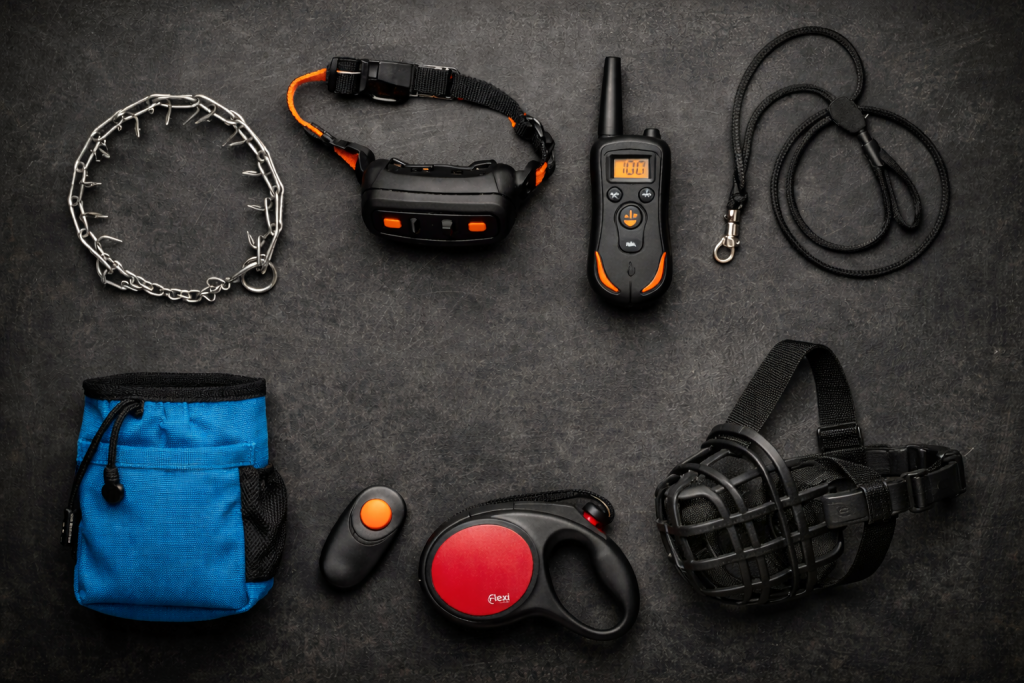
In dog training there are certain tools whose names immediately trigger strong emotions. Most commonly people talk about four things: prong collar, e-collar, crate, and muzzle.
On the internet you can read very conflicting opinions about them. Some consider them cruel, while others use them daily in professional training. The existence of a tool does not determine how it is used. Any tool — like a hammer, pencil, or knife — can be used inefficiently or incorrectly. As dog owners, our goal should be to achieve the best possible life together with our dog, and for that we need clarity and predictability in communication and learning.
In behavioral science, learning is described as a process where an animal responds to the consequences of its behavior and signals coming from the environment (Skinner, 1953).
Prong Collar
The prong collar is designed so that pressure is distributed evenly around the dog’s neck. With a regular flat collar, pressure is often concentrated in one point — usually on the trachea.
The design of the prong collar allows the handler to give a short and clear signal, after which the pressure immediately disappears. Because of this, it is often possible to use less force than with a regular collar.
Behavioral science literature emphasizes that the goal of training is not to correct the dog as strongly as possible, but to give clear and understandable feedback (Lindsay, 2000).

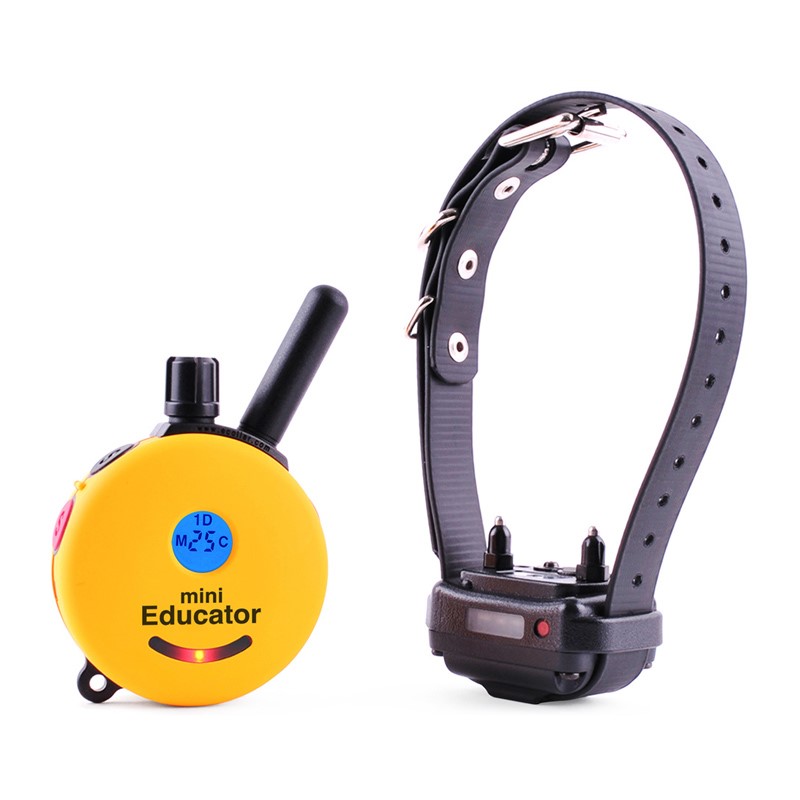
E-Collar
The electronic training collar, or e-collar, allows the handler to communicate with the dog even when the dog is far away. Modern e-collars can operate at a 100 different stimulation levels.
Studies have found that when used with proper guidance, e-collars did not cause greater stress reactions in dogs compared to other training methods (Cooper et al., 2014). At this point we must also ask whether it is possible to avoid stress completely. Instead, we should teach dogs how to cope with stress responses so that over time these reactions become smaller or disappear entirely.
Crate
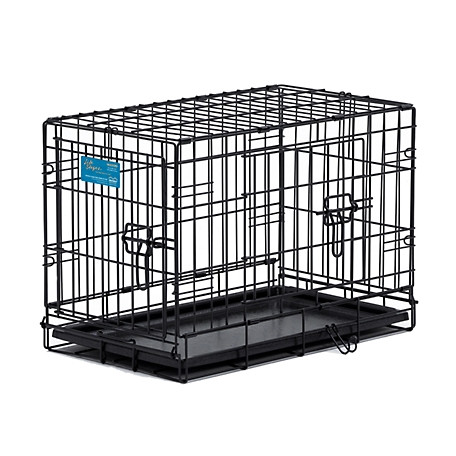
The crate is one of the most misunderstood tools. In reality it is often used to give the dog a chance to sleep and rest undisturbed in a safe place.
Many behavior specialists recommend crate training for situations such as puppy house training, traveling, or recovery after surgery (Overall, 2013). From a behavioral training perspective, the crate plays an important role. It also prevents serious consequences from the dog’s own mistakes. While in a crate, the dog cannot access random objects, trash, or things like grapes or chocolate left lying around — foods that could lead to a veterinary visit.
Muzzle
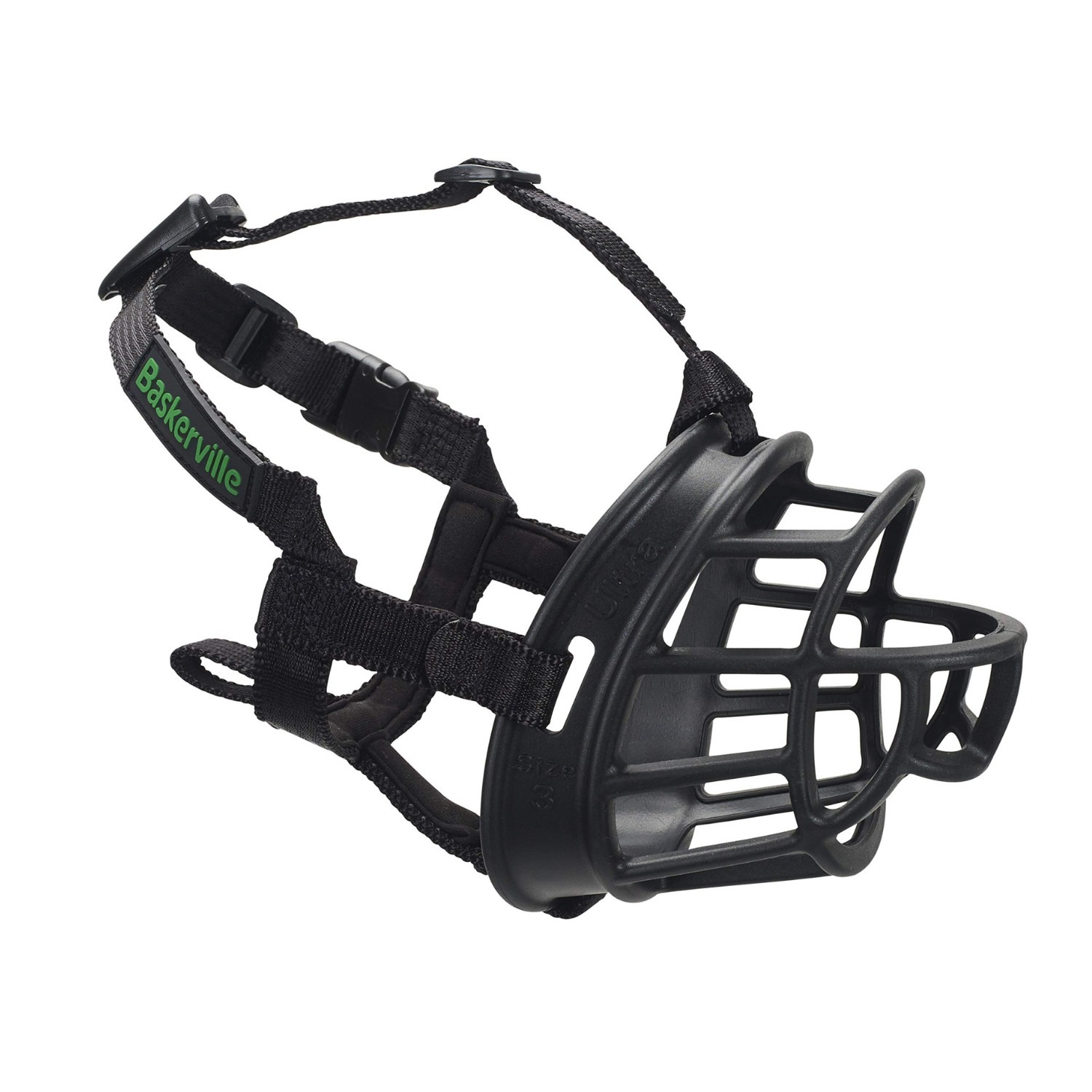
The muzzle is often associated with aggression, but in reality it is frequently used simply to ensure safety in various situations. A muzzle can also give the dog the opportunity to experience more real-life situations without putting other people or animals at risk. By using a muzzle, we can allow dogs to make choices in different situations — whether they are good or bad — and then communicate more clearly what we expect from them.
References
Skinner, B. F. (1953). Science and Human Behavior. Macmillan.
Lindsay, S. R. (2000). Handbook of Applied Dog Behavior and Training. Iowa State University Press.
Overall, K. L. (2013). Manual of Clinical Behavioral Medicine for Dogs and Cats. Elsevier.
Cooper, J. J. et al. (2014). The welfare consequences and efficacy of training pet dogs with remote electronic training collars. PLOS ONE.